
- Location
- Farmington Hills
Shoulder Impingement: Symptoms, Causes, and Treatment Options
Shoulder impingement is a common condition where soft tissues become compressed inside the shoulder joint, causing pain during lifting, reaching, or overhead movement. Also known as shoulder impingement syndrome, it’s one of the most frequent causes of shoulder pain in active adults and in most cases, it’s highly manageable with the right conservative care.
At Yousif Orthopedic Surgery, our shoulder impingement care in Troy, MI identifies the true cause of shoulder impingement symptoms and guides patients through evidence-based, non-surgical treatment plans that restore smooth movement, reduce pain, and prevent recurrence, without unnecessary procedures.
Request An Appointment

- Overview
Understanding Shoulder Impingement
Shoulder impingement occurs when tendons or soft tissues are repeatedly compressed between the upper arm bone and the shoulder structures during movement. This compression leads to irritation, inflammation, and pain, especially with overhead activity.
Unlike sudden injuries, impingement typically develops gradually. Many patients continue daily activities despite discomfort, assuming it is temporary strain. Without proper evaluation, symptoms may worsen, prolonging shoulder impingement recovery time and limiting work, exercise, and sleep comfort.
Early assessment is key to preventing progression and determining the right non-surgical approach.
- What’s Happening Inside the Shoulder
How Shoulder Impingement Affects Movement
During normal shoulder motion, tendons glide smoothly through a narrow space beneath the shoulder bone. With shoulder impingement syndrome, this space becomes restricted, increasing friction during arm elevation.
This often leads to:
- Pain during lifting or reaching
- Shoulder stiffness and fatigue
- Reduced overhead strength
- Compensation by surrounding muscles
When compression continues unchecked, inflammation persists and functional movement becomes increasingly limited. Understanding this mechanical process supports effective conservative care.
- Non-Surgical Care at the Right Time
Why Early Conservative Care Matters
For most orthopedic conditions, timely diagnosis can reduce the likelihood of needing surgery. At Yousif Orthopedic Surgery, we strongly believe that early, targeted non-surgical care leads to better outcomes and faster recovery. Addressing symptoms early can significantly reduce pain and shorten shoulder impingement recovery time.
Types of Shoulder Impingement Managed at Yousif Orthopedic Surgery
- Primary Shoulder Impingement: Occurs when structural narrowing causes repeated compression of tendons during arm elevation.
- Secondary Shoulder Impingement: Develops due to muscle imbalance or instability, allowing abnormal shoulder movement that increases tendon contact.
- Internal Shoulder Impingement: Common in overhead athletes, where soft tissues are pinched during extreme rotational movements.
- Functional Shoulder Impingement: Related to poor posture or movement patterns that alter shoulder mechanics over time.
Understanding SHOULDER IMPINGEMENT and ITS Care At Yousif Orthopedic Surgery
- Diagnosis:
How Shoulder Impingement Is Identified
Accurate diagnosis is essential, as shoulder impingement symptoms often overlap with rotator cuff or tendon conditions. Differentiating these ensures appropriate care.
Our diagnostic process includes:
- Detailed physical examination and motion analysis
- Targeted shoulder impingement tests
- Posture and movement assessment
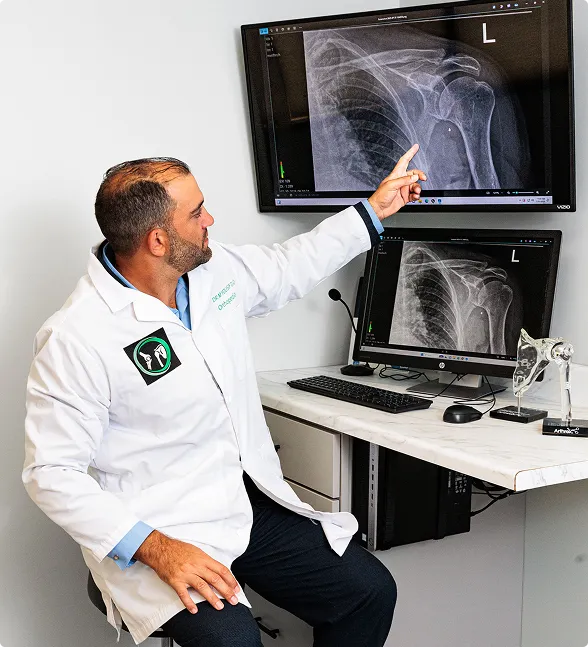
- Digital X-rays to evaluate bone structure
- MRI or ultrasound when needed
All findings are reviewed by our orthopedic specialists under the supervision of Dr. Yousif to ensure precision and clarity.
What Causes Shoulder Impingement
Understanding what causes shoulder impingement helps prevent recurrence and supports long-term recovery. Our orthopedic specialists also pay close attention to the underlying cause, since it shapes both the treatment plan and what to expect for recovery.

Repetitive Overhead Activity
Frequent overhead motion narrows the space within the shoulder, increasing tendon compression over time.

Poor Posture or Shoulder Mechanics
Forward-rounded posture alters joint alignment, increasing pressure on soft tissues during movement.

Muscle Imbalance or Weakness
Weak stabilizing muscles allow abnormal shoulder motion, leading to repeated impingement.

Structural Variations
Bone shape or joint alignment may naturally reduce clearance in the shoulder space.

Age-Related Changes
With aging, tendons lose elasticity, making them more vulnerable to compression and irritation.
Shoulder impingement symptoms: What to Watch For
Shoulder impingement symptoms often start mild and progress gradually. Common signs include:

Pain during overhead activity

Discomfort when reaching behind the back

Shoulder stiffness or tightness

Night pain when lying on the affected side

Reduced range of motion
Early recognition improves outcomes and shortens recovery timelines.
Treatment Options for Shoulder Impingement
Understanding how to fix shoulder impingement starts with identifying whether the cause is structural, postural, or muscular, that diagnosis shapes everything that follows. Treatment is then customized based on symptom severity, movement limitations, and lifestyle demands.

Non-Surgical Treatments (Primary Focus)
- Activity modification
- Targeted physical therapy, including shoulder impingement exercises and stretches
- Anti-inflammatory management
- Posture correction
- Guided strengthening and mobility exercises
- Injection therapy when appropriate
Surgical Treatment Options (When Conservative Care Fails)
- Arthroscopic subacromial decompression
- Removal of bone spurs contributing to impingement
- Repair of associated rotator cuff damage
- Acromioplasty to increase space within the shoulder joint
- Treatment of contributing structural abnormalities
Many shoulder impingement surgery candidates improve significantly with conservative care first; our approach to treating shoulder impingement prioritizes restoring natural mechanics, not temporary relief.

- Why Choose Yousif Orthopedic Surgery
Why Choose Yousif Shoulder Impingement Care
At Yousif Orthopedic Surgery, we combine expertise, precision, and compassion to deliver the right care at the right time, with a non-surgical-first philosophy for shoulder impingement treatment.
- Board-Certified Shoulder Impingement Specialists: Our team has focused experience managing complex shoulder mechanics and impingement conditions.
- Precision Diagnostics: We identify the true pain source to avoid unnecessary or ineffective treatments.
- Non-Surgical-First Philosophy: We prioritize conservative care to preserve joint health and function.
- Every plan is customized to restore stability, mobility, and control based on your activity level and goals.
- Patient-Centered Recovery Support: Clear guidance and ongoing support ensure confident, long-term recovery.

- Testimonials
Trusted Across troy & Metro Detroit
Posted onTrustindex verifies that the original source of the review is Google. Professional and kind. Awesome staff and wonderful doctor!Posted onTrustindex verifies that the original source of the review is Google. The staff is on top of itPosted onTrustindex verifies that the original source of the review is Google. Great placePosted onTrustindex verifies that the original source of the review is Google. He is the most informative doctor!! Takes his time. Answered all of my questions!!! Very, very pleasant and personable. Great experience!!!Posted onTrustindex verifies that the original source of the review is Google. Dr. Yousif made my experience for both of my hip surgeries great. From the initial consultation to post-op care, they were professional, knowledgeable, and attentive. They took the time to answer all my questions and made me feel comfortable about the procedure since I’m very young. The surgeries went smoothly and both hips are recovered! I highly recommend them to anyone in need of a skilled and compassionate hip surgeon any age.
We also operate in
Our primary office — 1500 West Big Beaver Road, Suite 115. Full diagnostic imaging, in-office procedures, and Dr. Yousif’s complete range of treatment services.
Detroit
Detroit-area patients regularly travel to our Troy office for joint replacement consultations, sports injury care, and orthopedic pain management.
Dearborn
We welcome Dearborn patients seeking specialized care for mobility restoration, joint health, and injury recovery at our Troy location.
Farmington Hills patients are a quick drive from our Troy office — no long commute needed for evaluation, treatment, or post-surgical follow-up.
Royal Oak residents come to us for shoulder, knee, and tendon condition management, with a conservative-care-first approach.
Southfield
Southfield patients have easy access to comprehensive orthopedic evaluation, non-surgical treatment, and pain management at our Troy office.
Novi-area patients can reach our Troy office in minutes for evaluation and treatment of joint, muscle, and sports-related injuries.
Bloomfield Hills
Bloomfield Hills patients are seen at our Troy office for advanced orthopedic evaluation and long-term mobility planning.
West Bloomfield
We see West Bloomfield patients for joint preservation, injury recovery, and non-surgical treatment planning at our Troy location.
Ann Arbor
Patients traveling from the Ann Arbor area receive the same personalized, non-surgical-first treatment planning as our closer-in patients.
Shelby TWP
Our second office — 53950 Van Dyke Avenue, Suite A, open Friday afternoons for follow-up visits and select appointments closer to the northern suburbs.
Schedule Your Consultation Today
Are you ready to move better and live without pain? Dr. Yousif is an expert orthopedic surgeon in Detroit and Troy, Michigan. Schedule a consultation today to discuss your treatment options.
Your Pathway To Recovery

Schedule Your
Appointment
Book your consultation online or by phone.

Comprehensive
Assessment
We diagnose your condition using advanced technology.

Effective
Treatment
We create a custom plan to meet your specific needs.
- blog & articles
read top articles from expert doctors

ACL vs Meniscus Tear: Differences, Diagnosis, Treatment

What Causes Shoulder Pain? A Complete Guide by Orthopedic Experts

When to See A Sports Medicine Specialist: Signs You Should Know!

Best Exercises for Tennis Elbow: At‑Home Exercises for Tennis Elbow

Knee Pain Explained: Causes, Symptoms, & Your Guide to Seeing an Orthopedic Doctor

Hip Arthroscopy: Your Comprehensive Guide to Procedure, Recovery, and Outcomes
- Faqs
Answer to your questions?
Have questions about our services, appointments, or recovery process? Here are answers to some of the most common questions our patients ask—so you can feel informed and confident every step of the way.
How long does shoulder impingement recovery take?
Recovery varies, but many patients improve within weeks with early non-surgical care. With surgical methods, recovery might take anywhere between 4-16 weeks of proper care and rest.
Can shoulder impingement heal without surgery?
Yes. Most cases respond very well to conservative treatment. Early diagnosis and guided non-surgical care significantly improve recovery time and long-term shoulder function.
What activities worsen shoulder impingement?
Overhead lifting, repetitive reaching, and poor posture commonly aggravate symptoms. Continuing these movements without correction can increase inflammation and prolong recovery.
Are shoulder impingement tests painful?
Most tests cause only mild discomfort and help pinpoint the problem. They are designed to assess movement safely without causing injury or lasting pain.
How do you fix shoulder impingement?
Fixing shoulder impingement starts with identifying its cause like structural, postural, or muscular and then addressing it directly through activity modification, targeted physical therapy, and posture correction.

Find The Best Orthopedic Doctor Near You
Contact Info
Office Timings
Monday - Friday
(8:00am to 4:00pm)
Don't Let Shoulder Impingement Limit Your Movement
Many patients wonder whether shoulder impingement will resolve with rest alone. While mild symptoms may ease temporarily, ongoing compression often persists without guided treatment. Early evaluation improves outcomes and helps prevent progression to a rotator cuff tear.